
At a Glance: 5 Things Every US Buyer Should Know
- 1. Import Duties — Antique items over 100 years old are duty-free when imported into the USA under US Customs regulations, but you need proper documentation to prove age.
- 2. Shipping — A genuine Mora clock stands up to 220 cm tall and requires specialist white-glove freight shipping, not standard parcel couriers; always confirm the shipping method before buying.
- 3. Authenticity First — The US market has seen an influx of reproduction Mora clocks; insist on provenance documentation and detailed photographs of the movement before committing.
- 4. Ask the Right Questions — A reputable seller should be able to tell you the clock's age, origin, paint history, movement type, and whether it has been restored.
- 5. Factor in the Full Cost — The purchase price is only part of the picture; budget for shipping, insurance, and any local restoration or servicing once the clock arrives.

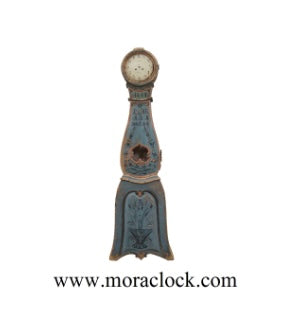
A genuine antique Swedish Mora clock — the kind of piece that makes the transatlantic journey entirely worthwhile.
Introduction
Interest in Mora clocks has grown enormously across the United States over the past decade. American collectors and interior designers have fallen in love with the elegant folk-art aesthetic of these Swedish tall-case clocks, and demand for authentic pieces has never been higher. But buying a Mora clock in the USA comes with a specific set of considerations that differ from purchasing within Europe — and knowing what to look for can be the difference between a treasured heirloom and a costly disappointment.
At Mora Clock, we ship regularly to customers across America, from New York to California. This guide is written specifically for US buyers navigating the process for the first time.
1. Understanding Import Considerations
The good news for American buyers is that genuine antique Mora clocks — those over 100 years old — qualify as antiques under US Customs and Border Protection rules and are exempt from import duties. This is a significant saving, as the tariff on decorative furniture can otherwise be substantial.
However, duty-free status is not automatic. You will need documentation from the seller confirming the item's age, ideally supported by provenance records, auction history, or a written statement of authenticity. At Mora Clock, we provide a full certificate of authenticity with every piece we sell, which satisfies US Customs requirements and gives you complete peace of mind.

Our cream and gold Mora clock — one of several pieces currently available for shipping to the USA.
It is also worth noting that some states have additional regulations around the import of antique items containing certain materials. If your clock has any ivory inlay or tortoiseshell detailing — rare, but not unheard of on high-end 18th-century examples — you should check with your local customs authority before purchasing.
2. Shipping a Mora Clock to the USA: What to Expect
This is the question we are asked most often by American customers, and rightly so. A genuine antique Mora clock is a large, fragile, irreplaceable object. Shipping it across the Atlantic requires specialist handling, and cutting corners here is a risk not worth taking.

Delicate hand-painted surfaces like this require professional packing and white-glove freight handling.
A reputable seller will use a specialist antiques freight company — not a standard parcel courier — to ship your clock. The clock will be professionally crated, with the movement secured or removed for transit, and the case wrapped in archival materials to protect the painted surface. Transit times from Europe to the USA typically run between two and six weeks depending on the freight route and port of entry.
Always confirm the following before you buy:
- Who is the freight company? Ask for the name and check their credentials.
- Is the clock insured in transit? Insurance should cover the full replacement value, not just the purchase price.
- Will the movement be removed for shipping? On a quality shipment, the weights, pendulum, and sometimes the movement itself will be packed separately.
- What is the delivery method at your end? White-glove delivery, where the clock is brought into your home and positioned, is worth paying for.
At Mora Clock, we manage the entire shipping process on behalf of our US customers, using trusted specialist freight partners with full insurance cover.
3. Authenticity: The Biggest Risk for US Buyers
The distance between buyer and seller creates an obvious challenge when it comes to authenticity. You cannot walk into a shop, open the hood, and inspect the movement in person. This makes due diligence even more important when purchasing Mora clocks for sale in America or from overseas sellers.

An authentic antique Mora clock in grey and white — the subtle crazing on the paintwork is a hallmark of genuine age.
The US market has seen a significant increase in reproduction Mora clocks in recent years — pieces that are styled to look antique but are modern productions, often made in Eastern Europe or Asia. These are not without their charm, but they are worth a fraction of a genuine 18th or 19th-century Swedish original, and they should be priced accordingly.
To protect yourself, always request:
- Detailed photographs of the movement — you should be able to see the plates, pillars, and gear train clearly. A genuine antique movement will show hand-finishing and patina.
- Close-up images of the dial — look for hand-painted Roman numerals with natural irregularities, and any maker's inscription.
- Images of the interior of the case — unpainted birch surfaces inside the trunk are a strong indicator of authenticity.
- A written statement of provenance — where was the clock sourced? Does it have any auction or collection history?
A seller who cannot or will not provide these things is a seller to avoid.
4. Questions to Ask Before You Buy
Whether you are purchasing from a dealer in the UK, Sweden, or from a seller advertising antique Swedish clocks with USA shipping, the questions you ask before buying are your most powerful tool. Here is what we recommend:

Ask your seller for the full history of any clock you are considering — a confident, knowledgeable answer is itself a sign of authenticity.
About the clock itself:
- How old is the clock, and how is that age verified?
- Has the paint been restored or is it original? If restored, when and by whom?
- Is the movement original to the case, or has it been replaced?
- Has the clock been serviced recently, and is it currently running?
- What is the wood — is it birch throughout?
About the transaction:
- What documentation will you provide for US Customs?
- Which freight company do you use for US shipments?
- What insurance cover is included in the shipping?
- What is your returns or dispute policy if the clock arrives damaged?
A reputable specialist dealer — as opposed to a general antiques marketplace seller — should be able to answer every one of these questions confidently and in detail.
5. Budgeting for the Full Cost
When you see a Mora clock for sale online, the listed price is rarely the total cost. American buyers should budget carefully for the full picture:

Factor in all costs before purchasing — a well-budgeted acquisition means no surprises when your clock arrives.
- Purchase price — for a genuine antique, expect to pay a premium that reflects the rarity and quality of the piece.
- Specialist freight shipping — transatlantic white-glove freight for a large antique clock typically adds a meaningful sum to the total cost; always get a shipping quote upfront.
- Transit insurance — essential, and usually calculated as a percentage of the declared value.
- Import duty — zero for genuine antiques over 100 years old, but confirm this with your customs broker.
- Local servicing — even a well-maintained clock may benefit from a service by a local clockmaker after its transatlantic journey. Budget a modest amount for this.
The total cost of ownership is still excellent value when you consider that a genuine antique Mora clock is a finite resource — no more are being made — and values have risen consistently over time.
Why Buy from Mora Clock?
We are a specialist dealer with years of experience shipping antique Mora clocks to customers across the United States. Every clock in our collection is personally sourced, authenticated, and documented. We handle the entire export and shipping process, provide full customs documentation, and remain available to answer questions before, during, and after your purchase.

Our rare bridal Mora clock — a once-in-a-lifetime piece, now available to collectors in the USA.
If you are ready to buy a Mora clock in the USA — or simply want to ask a few questions before you commit — we would love to hear from you. Browse our current collection and get in touch. We are here to make the process as straightforward and enjoyable as possible.
Mora Clock — specialists in authentic antique Swedish Mora clocks, shipped worldwide with care.