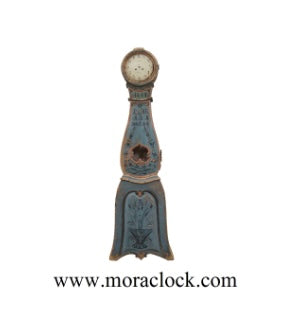

At a Glance: 5 Essential Care Tips
- 1. Wind Regularly — An 8-day Mora clock should be wound on the same day each week; a 30-hour movement needs winding every day. Never let it run completely down.
- 2. Keep It Level — The pendulum will only beat correctly if the clock is perfectly plumb; use a spirit level and adjust the feet until the tick is even on both sides.
- 3. Oil Sparingly and Correctly — A light application of specialist clock oil to the movement pivots every 3–5 years is all that is needed; household oils will damage the mechanism.
- 4. Avoid Direct Sunlight and Central Heating — Both will dry out and crack the painted birch case; position your clock away from radiators and south-facing windows.
- 5. Know When to Call a Professional — If the clock stops, runs fast or slow despite adjustment, or makes unusual sounds, a qualified clockmaker should service it rather than attempting DIY repairs.

A well-maintained antique Mora clock will run reliably for generations — with the right care.
Introduction
An antique Mora clock is not merely a decorative object — it is a working mechanical instrument that has, in many cases, been keeping time for two centuries or more. With the right care, it will continue to do so for generations to come. With the wrong care — or simple neglect — even the finest example can deteriorate quickly.
At Mora Clock, we are passionate about the long-term wellbeing of every piece we sell. This guide covers everything you need to know about Mora clock maintenance, from the weekly winding routine to knowing when a professional restorer is needed.
How to Wind a Mora Clock
Winding is the most frequent task you will perform, and doing it correctly is important. Most antique Mora clocks are fitted with either a 30-hour movement or an 8-day movement. The type you have determines how often winding is required.

The weight-driven movement inside an authentic Mora clock — understanding it is the first step to caring for it properly.
A 30-hour movement is driven by a single weight and must be wound every day — ideally at the same time each morning. To wind it, pull the left-hand chain or cord gently downward, raising the weight back to the top of its travel. Do this slowly and steadily; never yank the chain.
An 8-day movement has two weights — one for the timekeeping train and one for the strike — and should be wound once a week. Use the winding key (typically 4mm, 5mm, or 6mm depending on your movement) and turn it clockwise, counting the turns. Stop as soon as you feel resistance; overwinding can damage the mainspring or click mechanism.
A good habit is to wind your clock on the same day each week — Sunday morning, for example — so it becomes part of your routine. Never allow the weights to reach the bottom and the clock to stop through lack of winding; restarting a fully run-down movement puts unnecessary stress on the mechanism.
Setting the Pendulum and Regulating Timekeeping
The pendulum is the soul of a Mora clock. Its steady swing regulates the entire movement, and getting it right is the key to accurate timekeeping.

The pendulum hangs within the trunk of the clock — access it through the front door to make adjustments.
First, ensure the clock is perfectly level. Place a spirit level on top of the case and adjust the feet until the bubble is centred. Then start the pendulum swinging with a gentle push. Listen carefully to the tick: it should be perfectly even — tick-tock, tick-tock — with equal time between each beat. If the tick sounds uneven (tick-tock... tick... tock), the clock is not level and needs further adjustment.
If your clock runs fast or slow, you can regulate it by adjusting the pendulum bob — the disc at the bottom of the pendulum rod. Turn the rating nut (beneath the bob) clockwise to raise the bob and speed the clock up, or anticlockwise to lower it and slow it down. One full turn of the nut typically changes the rate by one to two minutes per day. Make small adjustments and check over 24 hours before adjusting again.
Oiling and Cleaning the Movement
A mechanical clock movement requires periodic lubrication to run smoothly and to prevent wear on the brass and steel components. For an antique Mora clock, we recommend a light service every three to five years, depending on how much the clock is used and the environment it lives in.

Regular care keeps both the movement and the painted case in excellent condition for decades.
Use only specialist clock oil — never WD-40, sewing machine oil, or any general-purpose lubricant. These products are too thin, attract dust, and will gum up the pivots over time, causing far more damage than they prevent. Clock oil is available from horological suppliers and should be applied in tiny quantities to the pivot holes using a fine oiler.
Dust is the other enemy of a clock movement. Keep the hood closed when the clock is not being wound or adjusted, and use a soft brush to remove dust from the case exterior. Never use spray polishes or damp cloths on the painted surface — a dry, soft cloth is all that is needed.
Caring for the Painted Case
The painted birch case of an antique Mora clock is as historically significant as the movement inside it, and it deserves careful attention. The original paint — often 150 to 250 years old — is irreplaceable, and any damage to it permanently reduces the clock's value and character.

Original folk-art paintwork like this should never be touched up without consulting a specialist conservator.
Position your clock away from direct sunlight, which will fade and crack the paint over time. Keep it away from radiators and other heat sources, which dry out the birch and cause the paint to lift and flake. In very dry environments — particularly centrally heated homes in winter — a room humidifier nearby can help maintain the moisture balance in the wood.
If the paint is flaking or lifting, do not attempt to reattach it yourself. Contact a specialist furniture conservator who has experience with painted antiques. A well-intentioned amateur repair can cause irreversible damage to an original surface.
When to Seek Professional Restoration
Some maintenance tasks are well within the capabilities of a careful owner. Others require the skills of a qualified clockmaker or conservator. As a rule of thumb, if the problem involves the movement — rather than simply winding, levelling, or pendulum regulation — it is best to seek professional help.

A professionally serviced Mora clock will reward you with decades of reliable, beautiful timekeeping.
Signs that a professional service is needed include: the clock stopping despite being wound, the strike mechanism failing to operate, unusual grinding or clicking sounds from the movement, or the clock consistently gaining or losing more than a few minutes per day despite pendulum adjustment. A qualified clockmaker will clean the movement ultrasonically, replace worn bushings, and re-oil all pivot points — a process that typically takes a full day's work and is well worth the investment.
For case restoration — repairing cracks, stabilising flaking paint, or addressing woodworm damage — always use a conservator rather than a restorer. A conservator's goal is to preserve what exists; a restorer may repaint or refinish, which, while sometimes necessary, should always be a last resort on a genuine antique.
A Clock That Rewards Care
An antique Mora clock that is properly maintained is one of the most rewarding objects you can own. It connects you to centuries of Swedish craftsmanship, fills your home with the gentle rhythm of a mechanical movement, and — unlike almost any other antique — actively improves your daily life by telling the time.
If you have questions about caring for your Mora clock, or if you are looking for winding keys, replacement movements, or other accessories, browse our range of Mora clock parts and accessories — or simply get in touch. We are always happy to help.
Mora Clock — specialists in authentic antique Swedish Mora clocks and everything you need to keep them running beautifully.