
At a Glance: 5 Reasons a Mora Clock Works in Any Trend-Led Interior
- 1. The Silhouette is Timeless — The hourglass shape of a Mora clock is as contemporary as it is historic; it reads as sculpture in any setting.
- 2. The Palette is Neutral — Swedish folk-art colours — cream, white, grey, sage — are the foundation of all three interior styles covered here.
- 3. It Adds Authenticity — In a world of mass-produced décor, a genuine antique brings irreplaceable depth and character that no reproduction can match.
- 4. It Works at Any Scale — Whether your room is a compact coastal cottage or a grand Scandinavian barn conversion, a Mora clock scales beautifully.
- 5. It Tells a Story — Every antique Mora clock has a history; that narrative quality is exactly what the most compelling interiors are built around.

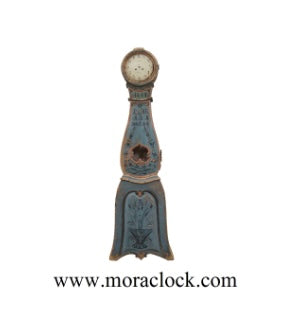
An authentic antique Mora clock — a piece that transcends interior trends because it predates all of them.
Introduction
Interior design trends come and go, but some objects exist outside of trend entirely. The antique Mora clock is one of them. Born in 18th-century rural Sweden, it has outlasted every decorating fashion of the past two and a half centuries — and today it sits at the intersection of three of the most popular interior styles in the world: farmhouse, coastal, and Scandinavian.
This is not a coincidence. The Mora clock's painted birch case, folk-art decoration, and quiet mechanical presence speak directly to the values that define all three styles: authenticity, natural materials, handmade quality, and a connection to place and history. In this guide, we explore why a Mora clock works in farmhouse, coastal, and Scandinavian interiors — and how to make the most of it in each setting.
The Farmhouse Interior: Rooted in the Land
Farmhouse style — in its English, French, and American incarnations — is built around the idea of honest, functional beauty. Natural materials, handmade objects, worn surfaces, and a palette drawn from the landscape: stone, earth, wheat, and sky. It is an interior style that celebrates age and use rather than newness and perfection.

The folk-art floral decoration on this Mora clock echoes the botanical motifs that define farmhouse interiors.
The Mora clock was literally born in a farmhouse. The original Mora clocks were made for and by the farming communities of Dalarna, Sweden — practical objects that also expressed the artistic identity of their makers. The folk-art kurbits decoration, the hand-painted case, the weight-driven movement: all of these speak the language of farmhouse design fluently.
In a Mora clock farmhouse style interior, position the clock in a hallway, kitchen, or sitting room with exposed beams, stone or flagstone floors, and natural textiles. A white or cream clock with floral decoration is the most natural choice. Surround it with objects that share its values: hand-thrown pottery, woven baskets, aged leather, rough linen. The clock's gentle tick and hourly strike add a layer of warmth and life that no purely decorative object can provide.
One of the great advantages of a Mora clock in a farmhouse interior is that its age is an asset, not a liability. The crazing paint, the worn edges, the slightly irregular movement — these are not flaws to be hidden but features to be celebrated. A Mora clock that has lived for 200 years brings a depth of character that no new piece, however beautifully made, can replicate.
The Coastal Interior: Light, Air, and Natural Texture
Coastal interior design is one of the fastest-growing styles of the past decade, driven by a collective desire for spaces that feel light, airy, and connected to the natural world. The palette is bleached and sun-washed: whites, pale blues, sandy neutrals, and driftwood greys. Materials are natural and tactile: linen, rattan, weathered wood, sea glass.

A grey and white Mora clock brings the bleached, weathered quality of coastal style to any interior.
At first glance, a Swedish antique clock might seem an unlikely fit for a coastal interior. In practice, it works extraordinarily well. The pale painted birch case of a Mora clock — particularly in grey, white, or cream — has exactly the bleached, weathered quality that coastal design celebrates. The folk-art decoration, with its botanical motifs and soft colours, echoes the natural world that coastal interiors draw from.
In a coastal setting, choose a Mora clock in a pale, washed-out colour — grey-white, pale blue-grey, or cream — and position it against a white or very pale wall. Keep the surrounding furniture low and light: rattan chairs, linen sofas, driftwood side tables. The clock's height and presence will anchor the room without overwhelming it. Add natural accessories — shells, sea glass, woven textiles — that echo the coastal palette without competing with the clock's folk-art decoration.
The key to making a Mora clock work in a coastal interior is restraint. The clock is the statement piece; everything else should support rather than compete with it. A single large piece of coastal artwork above a console table, a simple linen runner, a few carefully chosen objects — this is all the room needs alongside the clock.
The Scandinavian Interior: Hygge Meets Heritage
Scandinavian interior design has dominated the global conversation about home décor for the past fifteen years, and its influence shows no sign of waning. Rooted in the Nordic concepts of hygge (cosiness and conviviality) and lagom (balance and moderation), Scandinavian style is characterised by pale palettes, natural materials, functional simplicity, and a deep respect for craftsmanship.

A white Mora clock with gold detailing — the perfect marriage of Swedish heritage and contemporary Nordic style.
The Mora clock is, of course, a Swedish antique — which makes it perhaps the most authentically Scandinavian object you can introduce to a Nordic-inspired interior. While most Scandinavian interior clock choices lean toward minimalist modern designs, an antique Mora clock brings something that no contemporary piece can: genuine Nordic heritage, made by hand in Sweden, centuries before Scandinavian design became a global phenomenon.
In a Scandinavian interior, the Mora clock works best as a deliberate counterpoint to the surrounding modernity. Position it in a room of clean lines and pale surfaces — white walls, pale oak floors, simple linen upholstery — and let it stand as the single piece of historical complexity in an otherwise restrained space. The contrast is electrifying. The clock's folk-art decoration and mechanical presence bring warmth and humanity to a space that might otherwise feel cold or clinical.
For a Scandinavian interior, white, pale grey, or cream Mora clocks work best. Avoid heavily decorated examples in favour of those with more restrained paintwork — the goal is to complement the Nordic palette, not to overwhelm it.
Choosing the Right Clock for Your Interior

The right Mora clock for your interior depends on your palette, your space, and the story you want to tell.
Whichever of these three styles resonates with you, the most important thing is to choose a clock that speaks to you personally. An antique Mora clock is not merely a decorative accessory — it is a long-term companion, a piece that will be part of your home for decades and, if cared for properly, for generations.
Browse our current collection of authentic antique Mora clocks, available in a range of colours and styles to suit every interior. If you are unsure which clock would work best in your space, get in touch — we are always happy to advise.
Mora Clock — authentic antique Swedish Mora clocks for farmhouse, coastal, Scandinavian, and every interior in between.